intro
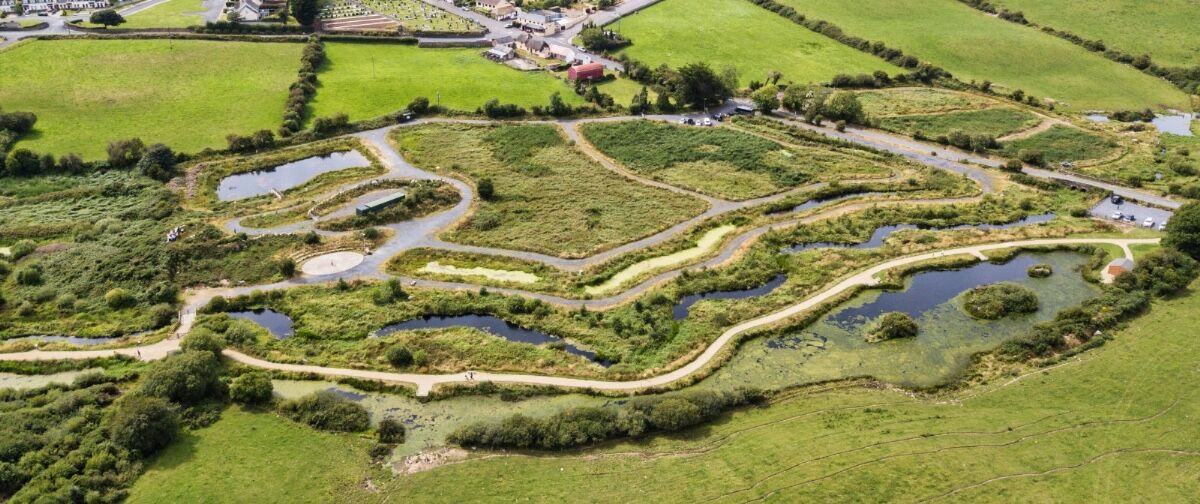
VESI have over 25 years of experience in delivering Integrated Constructed Wetlands across multiple sectors from public and municipal to industrial an agricultural. Over the years, we have refined our approach so that we can provide the highest quality services, in an efficient and timely manner. Our staged approach allows us to break down the project into smaller phases. This has the benefit of ensuring that we can carefully produce the design to cater for the specific needs of our client, as well as spreading the cost of the project across the stages.

Feasibility
This stage examines the feasibility of an ICW for the proposed project in question. Here, we consider various factors such as client needs, land availability and suitability, site constraints (topography) and ecological constraints (protected species or sensitive habitat). No two sites are the same, so every project must be considered.
During this stage, we gather information of the proposed development area. This information, coupled with information provided by the client such as expected flow volumes and influent compositions, will allow us to produce a 'Feasibility Report'. This compiles all gathered information into a single document on the feasibility of an ICW on location, followed by any constraints and recommendations on how to proceed.
Typically, a high level proposed ICW layout is also produced. This is for VESI-client discussion ahead of moving to the next stage, so that layout options and scope considerations can be taken into account.
Planning
This stage revolves around obtaining planning permission for the proposed ICW development, from the relevant state agencies, where needed. We will use all of the information gathered to develop a planning pack, which typically involves drawings, planning reports, newspaper notice and site notice. Depending on the project in question, additional reports may be included in this stage such as Appropriate Assessment Screening and Natura Impact Statements.
Detailed Design
Tender
During this stage, we will produce documents that will be referred to when the project goes to tender. Such documents may include a scope of works and bill of materials. This will help contractors to better understand the project and what it entails, to ensure that only interested parties with the required experience and equipment obtain the contract.
Construction
This stage is where the physical construction of the ICW is undertaken. During the construction phase, multiple site visits will be carried out by VESI in order to ensure that construction is occurring as per the design, as well as ensuring best practice is followed and any planning conditions are adhered to. VESI is also available to provide expert advice throughout the construction phase.
Commissioning
ICWs are developed in such a way that they can be commissioned as soon as possible. Generally, as soon as a cell is fully constructed, it can be planted with wetland species right away, even while the adjacent cell is under construction. This allows for the plants to become established quickly, decreasing the time to full functionality within the ICW. As soon as each cell is suitably developed and planted, the ICW is effectively ready to receive flows and will increase in efficiency as the plants become established. After one growing season, the system will be significantly well established, with two growing seasons considered full establishment. The commissioning phase and process allows for detailed examination and evaluation of the new ICW and it’s operations, ensuring compliance with planning.
Operations & Maintenance
While ICWs require significantly less maintenance compared to a conventional wastewater treatment system, they are not entirely self-regulating and do require some maintenance. VESI produces an 'Operations & Maintenance' document, specific to that ICW system. This document outlines all the items required to maintain the system at optimal efficiency, as well as the frequency that each item should be addressed. Due to the simplicity of ICWs, these tasks typically require little time and effort, once done regularly. Examples of such maintenance items include; ensuring pipework is clear, taking water samples (if required) and maintaining safe access.
VESI will also agree on a set frequency of site visits (e.g. quarterly) in order to assess the condition of the site and make any recommendations. With each site visit, we will produce a site visit report, outlining our findings and recommendations. These reports will act as a suitable record to look back on, should they be needed in the future.
More Content Related to Integrated Constructed Wetlands

Case Study: Glaslough Integrated Constructed Wetland
Read more

Case Study: Hospitality
Read more

Case Study: Tolka Valley Integrated Constructed Wetland
Read more

Case Study: Agriculture | Meat production
Read more